
Tag: Successful habits

  • Successful Habits

    There will always be more things demanding our attention than we will ever have time to address, so the sooner we develop successful habits the better.

    If you are anything like most people reading this you probably have a new project that you want to get working on, a few projects that you started and have to get back to, and a few dozen more you want to pursue but don’t have the time or resources. Am I right?

    If so, than you are not alone. Many entrepreneurs, including myself, fall into this situation at one time or another. Our brains don’t stop looking for new solutions so it is no surprise that the number of projects in queue continue to stack up.

    So, how do you mange this reality? Do the following for 21 days and your life will be changed forever!

    Get into the habit of pushing through your emotions.

    It is imperative that habits become your motivator and not your emotions. What often happens is that we jump into something while we are excited about it but once the excitement is gone so to is the desire to work.

    I have seen the ability to push through emotion present in more successful people than any other.

    Focus your efforts to one area at a time and do not move on until a task is completed. Break projects down to tasks that can be complete in one sitting, and don’t leave loose ends! Even if the results are not exactly like you would like them to be, a completed job is always better than an incomplete job.

    This principle is commonly implemented in formal project management. The idea is that jumping from task to task will only extend the over all time to complete everything. The project that is your life has too many parallel tasks to count so identify those that will allow progress in the direction you want to go and get them done, one at a time!

    Lets take a look at an example. Say we have three tasks that need to be completed and each task consists of three parts. Each part of each task will require exactly one day. With this scenario our three tasks could be illustrated as follows

    Task A


    Task B
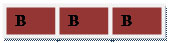

    Task C
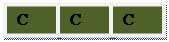

    If we alternate through each task until all are completed the sequence would look like the following;


    This approach would require 9 days for all tasks to be completed. Task A would be completed on day 7, task B would be completed on day 8, and task C would be completed on day 9. Not bad but not optimal.

    If we change the way we address the tasks and instead of alternating through each one we focus on one task until it is complete then move on to the next we would have something similar to the following;


    This approach would again require 9 days but unlike the first time around task A is now completed in 3 days, task B is completed in 6 days, and task C again finishes up in 9 days.

    You can see how this can be hugely beneficial in multi project environments in which dependencies on task completion are critical.

    As an entrepreneur you will find you will have less time than you need to complete the tasks you need to complete. Applying this principle could greatly assist you in your overall effectiveness but it will require you to fight the urge to take a break from one obligation in order to work on another.

    This successful habit if adopted will yield many dividends. If you develop a habit of continually completing tasks required for a specific project you will be surprised at how fast you will get the job done.
  • Case Study of a Successful Little Business

    I recently had the privilege to review the 10 year performance of a successful little business and want to touch on some of the general business principles that allowed this success. Confidentiality prohibits me from including specific details but you probably don’t care about those anyway; you want to know what you can take away for yourself. The company operates as a small business and has the volume of a good size organization with annual revenues over 10 million.
    What makes this case study interesting is that the subject company has seen roughly a 20% annual growth rate for the past 8 years. In case you didn’t realize it a 20% annual growth is HUGE and to do that for 8 consecutive years is even more amazing. Another twist to the story is that this company competes in an industry consisting of large conglomerates.

    So, how did they do it? Well, the answer isn’t a short one; there are many factors that played into their initial and continued success. The best explanation I can find for this dynamic is the “Fly Wheel” effect found in Jim Collins book Good to Great: Why Some Companies Make the Leap… and Others Don’t. Basically there was no one single decisive point that shot the company into the world of success. Rather, it was a continued effort (pushes of the wheel) that collectively allowed the company to grow. Interestingly enough each “push” is in itself unique and wasn’t required until the “push” before it was in place. This means that one of the biggest challenges of growth is the dynamic nature of changing needs.

    Dynamic Needs of Growth

    As a business grows its needs change and efforts must be shifted to accommodate the new demands. This fundamental truth is in part the reason few people “Get rich quick.” Healthy sustainable growth happens at an organic rate and through iterative efforts. I believe this dynamic is also much of the reason small businesses have such a terrific failure rate.

    The needs that exist when you start a business will not be the needs required to grow your business. Additionally the needs required to grow your business initially will not be the needs required to grow your business down the road. These needs will obviously be business and industry specific but what you need to understand is that your business is a changing entity that requires more than a single fixed solution to survive. Think of it like a plant that needs water to sprout, then apple juice for the next three weeks, then beer after that. If you simply continue to give it water it sprouts and flounders for a bit then dies. Wait, sprout and flounder for a bit before it dies? That sounds a lot like most small businesses. Hmmm.

    Back to the Case Study

    An added advantage to our case study that I don’t want to leave out is that its parent company has the finances to pay for changes that need to be made. This may not seem like much but it is a big deal when a company has to find the money to make the changes needed to grow. If you can’t already foot the bill for your planned growth it means you will need to assume additional risk beyond that inherent to the change you want to make. The lesion here is that good old saying “Cash is King!” As a small business you simply cannot afford to be cash poor if you want to grow. In some respects this is where the art of business comes in. Depending on your circumstance the question of how to manage your business successfully will change.
    The subject company leveraged its parent companies willingness to foot the bill on many occasions. Resources were acquired and workers were put in place each time a legitimate need existed to do so.

    Market Positioning

    I mentioned earlier that the subject company was competing in an industry with many large players, how is this possible? It was made possible by sticking to a market position that played into the strengths of small business. As a smaller company it could provide a higher quality product and service to its customer base than its larger competitors. It could also offer these products and services in a fraction of time. The larger organizations have bigger pockets, a larger product scope, perhaps even greater human capital, but none of those matters when a customer needs a high quality solution with a fast turnaround. What would take the large company 2 months the subject company can do in 3 weeks. When problems arise the large organizations have layers of bureaucracy between the customer and the person with the solution while subject company has a non-automated phone system and customers are patched directly through to the parties they care to talk to.

    The subject company has also decided not to compete on cost. Meaning, they will pass on jobs if they don’t feel they are appropriately compensated. This is hard for most small businesses because business is not always coming in at a constant rate. Consequently the subject company receives more money for the time and resources it puts into its work. This is justifiable because of the quality and speed with which the customer is served.

     K.I.S.S and Get ‘er Done

    As an engineer I must admit that I have had trouble with these principles but have learned to greatly appreciate them. At the small business level the K.I.S.S (Keep It Simple Stupid) and Get ‘er done attitudes can go a long way with the customer base. Over complicating a solution or following a bloated process can actually get in the way of solving the customers true problem. Remember, the customer doesn’t want your product or service, they want what your product or service will do for them. In other words if you can address their problem not the means to the end you could be offering more value to the customer. The subject company recognized this and removed all layers that didn’t speak to the customer’s core problem. Upper management is kept thin with no middle managers, everyone wears many hats, and open communication is maintained among the staff. The human capital element is highly leveraged making each employee more of a craftsman if you will rather than a number.

    Do You See a Bright Future?

    After witnessing all of these realities in such a successful little business I am certain they have a bright future ahead of them. My hope with this assessment is that you will find ways to apply these principles and consequently see similar success. If you are having luck let us know, and if you have questions feel free to leave a comment.

  • Why is Leadership Important in Business?

    Leadership is important in business because all people are silently asking to be led. If you want to learn how to make money, learn how to lead. Business is a collection of people working for the same cause, and a leader is required to define that cause. Growth of a business will only come through the time and talents of others. As small business owners and entrepreneurs, the sooner you realize this, the better. Using the time and talents of others will allow you succeed in larger projects faster and with a higher degree of quality.

    This lesson hit home with me when I hired a full-time drafter to take over drafting obligations. Previously I liked working designs out from start to finish so I knew everything about a new design or product. The trouble was that sales began to demand more and more of my time. So, I hired a full-time drafter to take over all of the modeling. It didn’t take long for me to see that he was 10 times better at putting together drawings than I was. On top of that, because he began working more closely with the product line, he began to notice inconsistencies that I glazed over. A good leader understands that specialized tasks are better facilitated by people with specialized training. I initially fought the push for more help, but once I relinquished the reigns, both the company and I were in a better place.

    Culture

    The leadership of an organization will also dictate the culture that a business operates in. Businesses often have a top-down management structure, and as such the leading authorities set the tone of the work environment. Authoritarian leaders will rule with an iron fist, creating a military-style environment, while laissez-faire leaders will promote a more laid-back culture. Each style is arguably more effective in different situations, but the point is that leaders are the ones responsible for the business culture. A good leader recognizes this dynamic and tailors the environment to best meet the needs of his or her workforce. This metric alone can result in the retention and recruitment of premium talent.

    Direction

    It is important not to confuse leadership with management. To manage is to make sure things are done right–to lead means determining the right things to do. Leaders define the direction and market placement of a company. They decide how to establish a competitive advantage and who to partner with in order to meet the needs of the customers. The leader has his or her sights set on where the company should be headed, who needs to be on the team in order to make it happen, and how the idea will ultimately be executed.

    How to Be a Quality Leader

    No organization operates without someone steering the ship, so if running a business is something you are currently doing, or looking into, understand that leadership is vital to your success.

    People want to be led by sincere individuals. It may be temping while in a leadership position to have all the answers all the time, but the truth is, no one has all the answers all the time. In fact, it is possible to build more loyalty with your workforce by admitting you don’t have an answer when you truly don’t. Employees will see through any attempt you make at giving an answer when you don’t have one.

    Fit a position to an employee, not the employee to the position. Employers often miss the mark when fitting employees to positions. They start with a fixed position that needs to be filled and fill it with the person that most closely aligns. There are times when this approach works, but a good leader understands that molding obligations to fit the strengths and aspirations of an employee will result in a happier employee and a more profitable bottom line. People that hate their jobs perform significantly worse than those that enjoy what they do. Be flexible and listen to the voice of your workforce.

    Be teachable. We already addressed the fact that you don’t have all of the answers, so listen when others talk. This falls in line with sincerity–people don’t like to work for someone who never listens and only dictates. The owner of a business should be the employee’s greatest advocate.

    What Happens Without Leadership?

    The best analogy that can be drawn here is a ship without a captain. Not leading an organization is a sure-fire way to make sure it sinks. Even with good middle management, if an organization lacks good leadership, the business will suffer. Eli Goldratt, the author of the theory of constraints, maintained that he would not work with second-generation companies. The idea was that poor leadership is not worth the trouble. I could give a specific example of an organization that thrived under the leadership of a father yet crumbled under the leadership of his son. Dad understood what it took to keep the business alive and well, son did not. Dad knew who to talk to when he didn’t have the answer, the son did not. Within two years of the company being handed over to the son, the business went belly-up.

    No matter who you are, or what your position, to some extent you are a leader to someone. Remember this while you pursue your endeavors.