Author: TJ

  • Maslow’s Hierarchy of Needs for a Small Scale Business

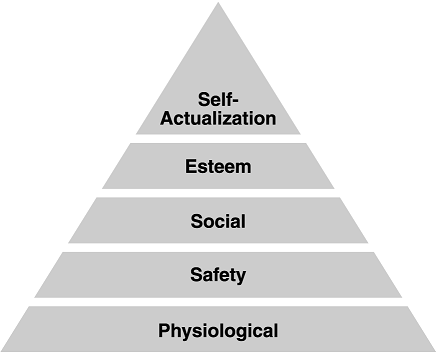
    For those of you who don’t know, Abraham Maslow published a paper in 1943 titled “A Theory of Human Motivation.” In this work he established a hierarchy of needs that he argued was fundamental to all humans.  The structure of his hierarchy is often portrayed as a pyramid with the more basic needs making up the base and the less essential needs towards the top. The needs in order are:

    1. Physiological
    2. Safety
    3. Love/belonging (social)
    4. Esteem
    5. Self-actualization

    Personification of Business

    You may be asking yourself how in the world a personal hierarchy can apply to a business. Businesses are an outpouring of their founder and as such carry many traits found in the individual. If you look at any company, large or small, you can trace its origin back to a person or a small group of people.  Additionally, the company was built to fulfill a need that others have, making it very much a relational entity. In short, you are your first business. I may explore this truth a bit more in future articles, but for now the above correlation is sufficient.

    Physiological Needs of a Business

    For the individual these are the literal requirements for survival; for the business this would consist of an audience, a need to fulfill, and a value proposition. If any one of these is removed a business will wither and die. The business is sustained through fulfilling the need of a group of people by posing its value proposition. Growth will come in the form of compensation.

    Safety Needs of a Business

    The safety needs of a business tie into how far away a company is from going bankrupt. This displacement is a function of how competitive the company’s value proposition is, how diversified its portfolio may be, and how much cash it has to weather unforeseen storms. The only threat to a business is its inability to turn a profit. So, anything that jeopardizes this would be in conflict with the safety needs.

    Social Needs of a Business

    Individuals realize love and belonging needs through friendship, intimacy, and family. A business is no different. Once a customer-supplier relationship is established through customer acquisition, the business must continue to invest into each customer in order to grow the relationship. A competitive advantage can bring new people to a business, but the relationship that is established is what will keep those people coming back and referring others. Said another way, the love and belonging needs would be the market’s acceptance and perception of the business as a member of their respective community.

    Esteem Needs of a Business

    For the individual, esteem needs speak to the desire to feel respected and to have a good self-image. For the business, the fulfillment of this need is made evident by expressed industry standing or awards. Awards and being number one in an industry may win over a few customers, but they are not required to turn a profit. This is why the esteem needs are further down the hierarchy. Having these fulfilled will help the business as an entity feel good about itself but are not required for survival. A company with a high collective self-esteem will cultivate a positive culture among its employees, which in turn will bring about more successful ventures.

    Self-actualization Needs of a Business

    Self-actualization is the fulfillment of one’s own potential. Companies that seek this fulfillment are the ones who so exceedingly meet a demand that they create new markets and innovations. Apple would be a prime example of self-actualization being fulfilled. In everything Apple has done, they have pushed the limits of how people create with technology. Steve Jobs directed the company towards excellence by helping people create in ways they could never achieve before.  Consequently, the iMac, the iPod, the iPhone, and the iPad all played a big role in the introduction of new markets. The self-actualization need of a business is tied tightly to the man steering the ship. The CEO of a business will dictate a company’s direction, which may or may not be towards self-actualization. CEO Steve Jobs led Macintosh through each of its largest innovations, but when he left, it began to lose its way and market share. Upon his return, Macintosh quickly returned to its initial direction and to profitability.

    Conclusion

    As an entrepreneur or small business owner you would be wise to realize the organic nature of the business you conduct. Businesses are living entities with needs that, if not met, will perish. If nurtured, however, they can grow to unprecedented levels, reaching and affecting the lives of many. As an entrepreneur, I know that there are many things on your plate, but I would challenge you to filter through the noise and find the one thing that you know you can do exceedingly well. It will be in that focus that you find your true genius.
    I have discussed another benefit to focusing your efforts in the article titled Successful Habits. In it I explore the ramifications of spreading yourself thin and the inefficiency of multitasking. When I learned this principle, my world changed, and everyone I have shared it with has also found it extremely helpful.


  • Where to Start Small Business Search Engine Optimization (SEO)?

    So you run a small business, you don’t have much money behind you, and you decide the web is a great place to increase your marketing efforts. A website is relatively inexpensive to build especially if you can carry some of the technical burden, and it provides a means by which you can reach the world.

    Sounds like you have a plan…right?

    Well, yes and no. While it is true that a website can be built for very little and once it is live it is accessible all over the world, the site will not generate traffic if you don’t offer something of value. Search engine optimization (SEO) can help your small business but regardless of how amazing your domain name is, and no matter how many friends you may have on your personal Facebook page, your website will do little for your business if the content is not as delicious as a ripe piece of fruit.
    I say this because great content is the first step to a quality site which means it is also the first step to effective SEO. Start by writing about and discussing the topics that your readers want you to touch on and don’t compromise for the sake of a keyword. The keyword game is a vital part of search engine marketing but it is not what provides the root value on your site. I discuss this method in a more detail at How To Increase Site Traffic, For Free!.

    A Tale of Two Sites

    Allow me to provide you with a quick case study. This is a study of yours truly and two sites I put together.

    Site “A”

    Like most people I began my pursuit of building money making websites with the idea in mind that I could simply write some content, optimize for a few phrases, and repeat the process to create some cash flow. I started with one site, three keywords, and gave myself one month. The domain was keyword rich and I was familiar with the topic so this was going to be easy.

    I laid out the plan and each day for a month I worked on a different part of the site. I set up a link wheel, commented on forums, and posted new content every chance I could. The month went by and I ranked #1 for my main keyword. I was happy.

    As time went by I would occasionally return to the site to moderate a comment or add a post. Traffic inched along and AdSense revenue began to come in. At the time I remember being so pleased with what I had accomplished, as I should have been not everyone has completed such a task. However, I did not realize that the site

    I had built offered little value to the readers that found it on Google. Consequently the bounce rate was quite high and the only users that came to the site were the ones who had never been there before.

     Site “B”

    As an entrepreneur I am always on the lookout for great new opportunities and one of those opportunities came in the form of a business associate’s desire to increase his business online. We agreed that I would take care of the website if he created and compiled the information. With that he began emailing me articles to put on the new site.

    This individual has been involved in his industry longer than I have been alive. He has published articles in magazines, and is very familiar with the each player in his arena. In short he is a fountain of knowledge and an amazing resource of high quality pertinent information.

    I leisurely formatted and posted each article until the site comprised of 50 or so entries. I did nothing in the way of keyword research or link building. The site was simply a compilation of all the information that my partner had provided.

    Initially we did not see a huge spike of traffic but over the course of a few months traffic began to come in. Additional articles were added and a few videos were posted to keep the site growing. Each article was quite lengthy and covered topics I wouldn’t have even known to have touched on if I was building the site by myself.

    The result? Site B currently out performs site A in all regards. Site B brings in twice as much traffic, has a lower bounce rate, and boasts repeat visitors. Consequently it has also received more external links. People actually want to visit site B, the visitors to site A were more or less tricked into stopping by.

    Conclusion

    What you can take away from this is that no amount of “gaming the system” will outperform true value. Take the effort you want to invest into the latest technique and put it towards establishing value for your target market. If you do this you will build the foundation for something that will not be affected by the change of an algorithm, or fall to a change in technology. Site A is not a spammy site that tricks its visitors but it does rely heavily on how Google’s bot indexes it into the SERPs. If Google change the algorithm the site could lose all of its traffic.  Site B on the other hand gets a portion of its traffic from people setting out to find specifically that site. They know it exists and they want to visit.

    In term of sales if you can create something of true value not only will it sell better, people will voluntarily sell it for you. How many ads do you see for extremely high quality products? The products that make up the majority of the ad space are the ones that have stiff competition and need the marketing to push buyers in their direction. Companies with a solid competitive advantage need not worry about playing of the emotions of their customer base, the product speaks for itself.

    I don’t want to bash SEO because I believe it is a hugely powerful tool but I do want to emphasize that it is only part of the equation. Remember brands like Rolex or Ferrari sell on their name; they don’t sell because they rank in the SERPS.

  • Business Model Generation Template

    The formula for success is a question that has long plagued entrepreneurs, but a helpful tool now exists that will assist in identifying the primary metrics of any business. The business model generation template comes from the minds of 470 contributors and was compiled in the book Business Model Generation: A Handbook for Visionaries, Game Changers, and Challengers, authored by Alexander Osterwalder.

    The approach that Mr. Osterwalder and his team established exists to identify the fundamental elements required for a viable business venture. The method has gained so much attention that it is being used in Stanford Universities’ ENGR 245 course. Professor Steve Blank teaches his students to set a baseline model for a venture and rapidly change the design as their intuition about the customer grows.

    I strongly encourage you to get the book and familiarize yourself with business model generation. Once you have, you can define your own ventures according to it. In turn, this will allow you to identify potential strategies as well as shortcomings your organization may have. A preview of the book is available here. Take half an hour and study the approach. It is fairly straightforward, so you may not even need that long.

    Entrepreneurs are often their own biggest enemy because they don’t fully understand their business. A contributor to this reality is the inability to standardize business dynamics. Business model generation, however, provides a framework by which entrepreneurs can iron out all of the major elements of their venture and visually communicate them to others. The generation model consists of the following 9 elements.

    The Customer

    It begins with the customer and the market your product or service will serve. Will you be targeting a specific demographic or geographic region, or is your focus a bit broader? What is the need you will be fulfilling, and why does it exist? These questions and more are answered through the model, and it provides an intimate understanding of your target market.

    The Value Proposition

    A value proposition is effectively your solution to the customer’s problem. How is your company providing value to your market? As you will see in the book, there are many ways to bring about value.

    Channels

    Channels are the means by which value is delivered to the customer. For physical products this could be distributors and warehouses. Digital products may include such channels as Amazon or Clickbank.

    Customer Relationships

    This probably goes without saying, but identifying how customer relationships are facilitated through your company is an important element to nail down.

    Revenue Streams

    How is the money coming in? Are their multiple streams? What are they? How do they work? What is the pricing structure? If a market is mature it will define much of this inherently. If you are competing in an emerging market, there will be more freedom to explore other possibilities.

    Key Resource

    What are the primary resources that allow you to fulfill your value proposition? This would relate to physical assets, people, and finances. This may also include proprietary methodologies that are not readily available.

    Key Activities

    What are the primary actions that allow you to deliver the value proposition? This will also be driven in large part by the nature of the market. Mass market products that focus on the general populace will require a great deal of marketing, whereas specialty manufacturing products will require specialized processes.

    Key Partnerships

    These are all of the relationships that aid in providing your value proposition to the customer. Suppliers, contributors, and joint venture partners would all fall under this category. Partnerships often play integral roles in small business because of the limited funding. A landscaper, for example, may team up with a home builder to perpetuate business. In all instances these will be win-win scenarios.

    Cost Structure

    All businesses require money to be spent in order to operate. What will it cost to provide your value proposition? There will always be more ways to spend money than you need. Identifying the primary elements that allow you to provide your solution and accounting for them appropriately is vital for success.

    Using the Tool

    The canvas template tool will allow you to outline a complete organization. Mr. Osterwalder suggests exploring multiple models when addressing your start-up. Much like prototyping a product, he mentions “prototyping” your business model. You may have originally set out to supply the end user with a single product, but perhaps it would be possible to create a subscription-style compensation in which your product is only available as long as the customer subscribes. If you don’t plan on pursuing alternative “prototypes” it is wise to explore the potential alternatives.

    I have taken the liberty to create a form-based Business Model Generation Template PDF.

    Using this visual allows you to convey to potential investors and people within your organization how your company operates. It will also help you to see the big picture. No single part is more important than the next; they all play a role in moving the business along. Once you establish your model, it would be wise to revisit it from time to time to update it and make any changes that may be required. Small business is very dynamic and in some cases changing your model entirely may be the most appropriate move.
    I have provided the canvas for SHYEntrepreneur.com to give an insider’s view of our organization.

  • Why is Time Management Important?

    Time is the only one true fixed resource. Having a finite amount of time to complete any task makes time management an integral part of an organization.  Entrepreneurs often have difficulty balancing their planning and organizing while simultaneously entertaining potential customers. What most don’t realize is that the time they have is very limited, and not all responsibilities carry the same weight. The good news is that time management skills can be acquired and sharpened.

    What is Your Goal?

    The reason your business exists is probably the same reason most for-profit businesses exist, to make money. As strange as it may sound, people often lose sight of this simple truth and exhaust themselves on matters that don’t bring in the profits they need.  Small businesses and entrepreneurs cannot afford to not make money, so be sure you spend your time on items that are closely tied to your bottom line. As your business grows, you will be afforded the ability to invest into matters that are indirectly tied to your success, such as community events and fundraisers, but initially non-money-making events can push you closer to closing your doors.

    Invest Into Your Competitive Advantage

    As a small business and entrepreneur you have a clearly defined competitive advantage, right? I have discussed previously the factors of competitive advantage, but it is worth addressing again. The value you bring to your customers is directly tied to the money you will make. As you conduct business, it is wise to spend time identifying your customer’s needs. Continually refining and building your competitive advantage is time well-spent. Markets change, which causes the needs of your customers to fluctuate, and a wise business owner will know where the trends are headed and position themselves to take full advantage of future developments.

    Small business is often in the business of quick turnarounds, which may even be the bulk of your competitive advantage. If this is the case, I don’t need to tell you why time management will help your company succeed.

    Have You Exceeded Your Capacity?

    Sole proprietors can often find themselves at the end of their rope because they are the entirety of their business and they can’t justify bringing in some help. The truth is that growth will be much faster when capacity is not maxed out.  Having a growth strategy and increasing your capacity can be the first step towards a well-managed organization and additional time to do what you want. In project management, buffers are introduced to account for variability, and the same principle applies to individuals. If you don’t have a buffer of down time in your schedule, your overall productivity will decline. As a resource reaches 70% of its capacity, its throughput begins to decline. Use this metric to determine if you need help, and increase the capacity of your organization each time it reaches the 70% mark.

    Are You Multitasking? STOP IT!!!

    Few things are as detrimental to completing a project as multitasking. We have been conditioned to believe that multitasking is a good skill that should be practiced and admired.  The truth is that multitasking is the culprit behind more unfinished projects than anything else. The specifics of this can be explored in the article “Successful Habits.” The short of it is that multitasking pushes every task out to be completed at the end of your allotted schedule as opposed to finishing single tasks early.

    There is a cognitive lag that occurs when you switch your thinking from one focus to another. This means that time is lost as you stop thinking about one issue and begin thinking about the next. Your brain operates much like a fly wheel that starts off slow, picks up speed, and then requires time to slow down. Jumping from task to task requires you to get up to speed, complete the task, and then slam on the brakes for the next transition. You can see how this can become exhausting as well as time consuming. If you stick to one task until it is complete you will finish faster and probably do a better job.

    Follow the Pareto Principle

    The Pareto Principle is most commonly referred to as the 80/20 rule. 80% of the spoils come from 20% of the effort. By leveraging this principle you can be sure that your time is spent working towards your goal of making money and not spent treading water. Prioritizing according to Pareto can be tricky because 80% of the things that you could spend your time on won’t help your bottom line. Learning how to sift through the noise to get to what really matters is a skill that must be actively practiced.

    A tool that can help you with applying the Pareto principle is Stephen Covey’s time-management matrix, explored in the article “Small Business Resource Management.” The matrix identifies the relation of urgency to importance and establishes four quadrants of time consumption. This offers a great starting point for identifying which tasks you may want to off-load to an employee and which ones you should invest in a little more.

    Conclusion

    There is no wrong way to approach how you manage your time, but there are most certainly better ways to go about your business. It should be noted that individual work habits and personalities will respond differently to the techniques shared above. Keep your mind open to new approaches, adopt what works, and ignore what doesn’t.
    Personally, I have found that I am my biggest roadblock, and breaking through my own predispositions had afforded me more time than anything else. This is especially true for you perfectionists out there. Perfection is the enemy of completion. A good job done on time is better than a perfect job completed late.

  • How To Make Money On Craigslist Location Arbitrage: $60 Dollars in 30 minutes.

    I am living proof that $60.00 can be made in as little as 30 minutes on Craigslist.

    Location Arbitrage

    My wife and I were shopping for a rug at a well-known department store. The strange thing was that the rug was half price ($100.00) on one side of town and full price ($200.00) on the other. Not wanting to travel to the other side of town to pick up the rug, we asked if the sale price would be honored at the store closest to us. They politely told us that the clearance sale was a function of local inventory and could not be honored at all stores. So, we made the 20-minute drive across town to pick up the rug for half price.

    The rug was paid for, sitting in the back of our car, and we were headed out of the parking lot when I told my wife to turn around. This particular store is considered to have high-quality products, so I thought, “Why not purchase a second rug and post it on Craigslist and see if we could make a few bucks?” The return policy was 90 days, so if it didn’t sell in the next 2 months, we would have more than enough time to take it back for a full refund.

    I purchased the additional rug and put it in the car. On the ride home I started to write up the ad on my phone. By the time we got home I had put together what I considered to be a straightforward offer. The name of the store has been redacted.

    “[NAME REDACTED] AREA RUG 5′ x 7′ (NEW) Floral Brown – $160”
    Brand new, never used area rug. 5 feet by 7 feet in size. Great for a dining room or living room. Purchased from [NAME REDACTED]. Give me a call for this great deal.

    The offer was accompanied with a high-quality photograph and went live.

    I figured we could post the ad, see if there was a response, and lower the price incrementally if there were no hits. The first day there was nothing, no calls. Day two, still nothing, so I decided to renew the ad and post it again in another category. That night the ad was renewed and brought to the top of the listings in two categories. Day three, we received a text and a phone call from two separate people interested in the rug. Having two interested parties meant we were not going to have to come down in price. The gal who called said she wanted it and brought us the money that night.

    • Total time invested: 1800 seconds.
    • Total financial investment: $100.00
    • Final sale price: $160.00
    • Profit: 60.00
    • hourly earnings:  $120.00

    How Was Value Added?

    So, how is this possible? In order for us to make a profit, we must have had something of value and a competitive advantage over our competition. We were able to make money on this transaction because the demand for the product existed, and our competition (the local branch of the department store) was offering the same item for 25% more than what we were. Additionally, the product was new and unused, so buying from us (a non-credible source) was not an issue. This would not have been possible if the local branch was offering a lesser price, or if the demand didn’t exist. We added value to potential customers in our area by bringing the product to our neck of the woods and offering it for less than what they could get anywhere else.

    How Was Risk Assumed?

    We assumed risk in the respect that 100 dollars was invested without any guarantee that the item would sell. We did have a safety net because the store had a 90-day return policy, but returning the item in 90 days at no gain would almost equate to a loss. Committing funds for 90 days without a return could be considered a holding cost, and the opportunity loss from not having 100 dollars for 90 days could be as much as 100%.

    When to Buy and When to Sell

    The root cause of the opportunity above is the seasonality of consumer product lines. As we transition into the next season, major department stores lower their prices to move out the old inventory and bring in the new. These stores don’t want to hold onto the product for a whole year, because the demand will not be the same, and holding costs would be high. So, use this reality to your advantage and purchase goods out of season. In How to become an Entrepreneur I illustrate a similar opportunity to the one above that I failed to capitalize on but that existed for the same reason.

    Capitalizing on the seasonal demand means having your product available before the season begins. It also means marketing to the appropriate demographic. Many entrepreneurs fail to move product because their potential customers have no idea the offer exists. In the example above, I had to broaden exposure by adding a second listing and renewing the current one. Had I not, we would not have sold the rug so quickly. I can’t say exactly which ad the buyer saw, but the original was posted in “household” and the second was posted in “furniture.”

    Buying and selling goods like this can be a very lucrative way to make some cash on the side. If you are thinking about taking this up, I would suggest you establish a niche market to focus on. The more you can build your knowledge on one product line or target market, the more you will be able to identify a good buy when you see one. Additionally, you will become more familiar with where to find buyers. Like anything you do, the more you practice, the better you will get and the more fun it becomes.

    Lastly, I will leave you with a quote I recently heard from a friend. He heard it somewhere, so if you know who the original source is please let me know.

    “A good deal at the wrong time is not a good deal.”

  • How Do I Set Up a LLC Without A Lawyer?

    Limited Liability Companies (LLC) are business entities that got their start in 1977 and are considered to fit somewhere between sole proprietorships/partnerships and fully incorporated companies. Existing to fill the gap between corporations and sole proprietors, LLCs can help to segment personal and business assets and liabilities while at the same time maintaining a simplified tax structure.  An LLC is not a corporation, but it is a company structured to operate like a corporation.

    Liability

    An LLC is its own legal entity, so long as it is treated as one. The LLC can assume obligations of debt. In other words, the LLC, not the members, hold a loan and the liabilities that go along with it.  If, however, the members of an LLC use the entity as their personal bank or for personal matters, it is possible that the LLC will not be recognized as a separate entity if a lawsuit is filed.

    Taxes

    As far as taxes go, LLCs are considered by the IRS as pass-through entities. This means income passes through the business and goes straight to the LLC members, just as they would with a sole proprietorship or partnership. These profits or losses are filed on each individual’s tax return. A caveat to this is that LLCs can be taxed as a corporation if the members elect to do so. So, if treated appropriately, an LLC can shield its members from the liabilities of a corporation without assuming the tax overhead a true corporation must maintain.

    How to File

    If you are thinking about forming an LLC for your business, spend the next 20 minutes educating yourself on the difference between sole proprietorships, LLCs, and corporations. My guess is that for most people starting out, a sole proprietorship will be sufficient for current needs and much cheaper than filing for an LLC.

    If you have done your homework and have decided that an LLC is the way to go, what next? The steps to filing an LLC are not complex and although requirements vary from state to state, setting up an LLC is a simple process that can usually be done in an hour.

    1. Articles of Organization

    The first step is to contact your secretary of state and obtain the required form for filing a LLC. In some cases this will be a simple fill-in-the-blank form. The state of Washington, for example, has an online application. The process guides you through establishing a legal business name, completing the certificate of formation, establishing the registered agent, defining the members, as well as guides you through the initial annual report. The fee for WA is roughly $200, and additional costs may apply depending on how you file. Google your secretary of state to find out more of the specifics.

    1. Registered Agent

    As you fill out your articles of organization, you will be required to define the registered agent for the LLC. In most cases this will be you. The registered agent is the person or business that is designated to receive important documents on behalf of the LLC. The most appropriate individual for this is generally the one spearheading the business.

    1. Operating Agreement

    The operating agreement is the internal agreement between the members of the LLC. It is not required to form the LLC, but it should be drafted to state the rights and responsibilities of the members. The operating agreement should contain but is not limited to the following;

    • Capital Contributions. How are the members expected to make capital contributions if the business needs additional capital?
    • Management Decisions. When the members are faced with important management decisions, does each get one vote, or do they vote according to their percentage interests in the LLC? Majority shareholders may feel they deserve a larger say.
    • Financial Withdrawals. How do owners go about withdrawing from the profits of the business?
    • Buy Out/Cash out. How do members leave the LLC? Will they receive an immediate payout of their capital contributions?
    • Compensation. If a member does leave, how much should they be paid?
    • Share. While there are not actual shares within a LLC, it should be defined how or if a departing owner is allowed to sell an interest to an outsider.

    Publish a Notice
    Some states require a notice of intent to be published. This can be as simple as running a classified ad in your local paper. Specifics on this will vary and your secretary of state can provide you with the steps required.

    Licensing
    The last bit to think about is obtaining other appropriate insurance, permits, and licenses for your new LLC. Each industry had its own unique set of requirements, so be mindful of this once your business is established.

    Conclusion
    LLCs are considered by many to be a great way to establish a small business. There is little required to get one started and the protection they provide could be priceless. That said, an LLC may not be needed for everyone. Only you know the entity type most appropriate for your business.

  • What Is In A Name? What You Need To Know When You Name Your Company

    One of the hurdles you will undoubtedly run into when starting up a small business is choosing your company name. The quick and easy advice is to find something catchy, relevant, memorable, short, and unique, but I don’t want to leave it at that. What you call your company is very important and there are many reasons why. Follow me as I address considerations that may not have crossed your mind.

    Just as with you product or service, the first thing you want to think about is your target market. Your customers will care more than anyone about your company name. Your target demographic and market positioning should be well-defined; if they are, you may be able to fit your primary competitive advantage into your name. This will help your customers visualize the benefit of your business.

    Think about the idea you want to give people: You want to sound like you know what you’re doing right? A funny name may be fitting for a dog kennel but would be less fitting for a law office.

    For ideas, you can start by looking at your competition. Each industry may have a common convention or approach to company names. As an example, it is often easy to tell when a company is related to computers and technology–they often incorporate things like “Sys” or “Tech.” Ohh… SysTech… I wonder if that name has been taken?

    Appropriate Scope

    Don’t’ be too narrow or too broad in scope. If you are starting up a landscaping business, you may want to focus on just lawns. If that is the case, a name like “Lil’ Jimmies Lawn Care” may be appropriate. If, however, you are into moving dirt and want to focus on commercial accounts, a name like “Rocky’s Landscapes” may be a bit more fitting.

    Keep in mind where you will fall in directories or the phone book. Names starting with numbers or letters at the beginning of the alphabet may be desirable. AAA services vs. ZZZ Services. This concern is becoming less and less of an issue as we move towards a semantic web, in which case descriptive words will carry more weight.

    Keeping It Local

    It is advisable for local businesses to adopt a title associated with their town or city.  Doing this builds instant rapport and credibility as well as a sense of community. Google has been very intentional to list local companies when searches are made regarding local services. New York Window Cleaners may rank well for a search such as “window cleaning services” made in the New York area.

    Can it be abbreviated? People will naturally shorten the name. Pink Puddles Dog Care becomes the Pink Puddle.

    To Build or Not to Build a Brand

    Building a brand name = money, money, money. Regardless of what name you choose, building you brand will take a good deal of time and money. Most small businesses won’t need to worry about brand recognition, at least initially. Brand recognition holds more weight in highly saturated markets. Smaller firms by nature won’t be competing in highly saturated markets.

    When everything is said and done and the dust settles, the name means nothing if you don’t have a good product or service. Your product is your greatest advocate, so be sure to push a product or service that you believe in. Success will be knocking at your door if you have a business that exists to fulfill a true need.

    Lastly, before you decide, get a list of many possibilities and compare them to each other. Have anyone you know that is familiar with the industry give their opinion. Seeking the thoughts of others is always a prudent move.

    If after everything above you are still stuck, you can try the method used to come up with domain name variants. I did not come up with this complete process on my own; it is a compilation of my own method and ones adopted from others.

    The Matrix Method

    Set up a matrix in Excel, on a sheet of paper, or a whiteboard. Start with 5 columns and 5 rows. Grab a dictionary, thesaurus, and Google.

    In the first column write down all the words associated with your business. When you think of your business, what are the main things you thing about? Include products, services, names, and any other iconic embodiments of your business.

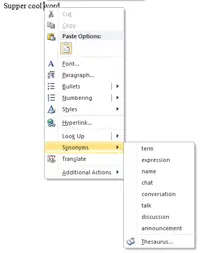
    In the second column write down words associated with the first column. Synonyms can be quickly generated by typing the word in Microsoft Word, right clicking, and hovering over “Synonyms.”


    In the third column write down verbs associated with your company, products or services. These would be action terms. It is ok if a term is a stretch–this is simply a brainstorming session.

    In the fourth column write down any words that have a double meaning. Draw upon words in other columns and find double meanings, insinuations, and variations. Alternative spellings or clever phrasings can be used to create a witty name that people will remember.

    In column five you will write down external references. You are looking for any phrases, quotes, or book titles associated with your industry. Identify existing manners of speech that are common knowledge and well-known. This will be especially helpful for businesses that are competing in a more ambiguous market.

    Once you have a good chunk of words and phrases, get rid of anything that is obvious garbage. Pair up words from each column, and mix and match to see if you can come up with a keeper.

    If this has been of any help let us know, and it would also be cool to see what names you came up with.

  • Drum Buffer Rope (DBR)

    Drum Buffer Rope (DBR)

    The Drum Buffer Rope (DBR) approach is a management tool used in the Theory of Constraints and follows the five focusing steps when assessing a physical process. With a physical process there exists and input, an output, and interrelations between work cells or departments. DBR provides a means to manage the throughput in pursuit of achieving 100% due date performance.

    The Drum in DBR.

    The Drum is simply the constraint of the process. It sets the beat of the system and is used as your single point of control. In many cases the constraint will be obvious, but as it is elevated it is possible for it to move. Lets say a machine shop has a specific machine as the constraints, once identified DBR can be put in place. If that machine shop however decides to purchase another one of the constraint machines and doubles the capacity at that location, it is quite possible the constraint could move. If this happens, the new Drum must be identified in order to continue managing according to the constraint.

    Having the ability to move the Drum means that an organization can strategically place the drum in any location they choose.  This can be greatly advantageous depending on the plant type. An “I” style plant can have a number of locations that would work for the constraint and location will depend on specifics of each plant.

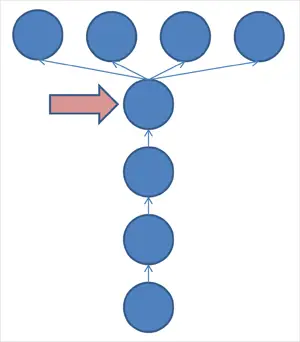
    “V”,”A”, and “T” style plants on the other hand have optimal points of control.

    A “V” style plant would be one that often starts from a single raw material and produces many parts. A foundry, or an injection mold facility may fit this plant type well. In any case, the location for the constraint is best suited at the base of the “V”. If the base of the “V” can be controlled, and all aspects beyond the vertex have excess capacity one could expect exceptions due date performance.

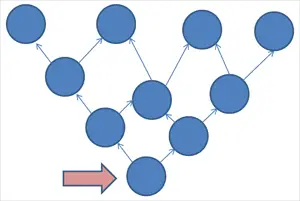
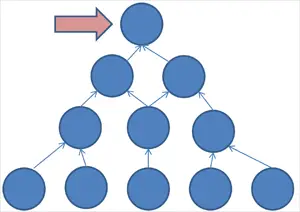
    Plants that follow more of an “A” flow would look as follows

    The Drum in this case is again at the vertex, but the vertex is now the last point of the process. With an “A” plant one only wants the work in progress to be that for orders placed. Taxing the system with anything other than orders received puts a load on the system as a whole that will decrease the due date performance. Coordinating assembly efforts, and accounting for variability before the Drum may be a task in itself but the best results will come with the Drum at the top. The buffer in this case may be a shipping buffer which contains finished products.

    The last flow style I will touch on is the “T” style plant. The Drum in a “T” plant is best placed at the T.

    This could be a plant that customizes their product to fit personalized requests. Much of their products are the same but require a quick modification at the end of production to make them ready for a specific customer. A wooden sign shop would be a good example.

    The Buffer in DBR.

    The Buffer is put in place to insure that the Drum always has work to do. Additional buffers are often incorporated throughout the process but the original Buffer was put in place to protect the Drum. It is not uncommon to see material buffers, assembly buffer, and shipping buffers in a fully integrated DBR solution.

    Buffers are required to account for the variability that will no doubt show up. Machines break down, people get sick, and sometimes it snows. Having strategic buffers will minimize dependences that may disrupt the production process. Placement of buffers will change with plant flow just as the Drum placement did.

    The Rope in DBR

    The Rope is the release timing mechanism that informs prior processes when to start producing. It is the pull if you will of down line operations to up line operations. The Rope operates in real time and signals for material as it is consumed. The Rope is what allows the release of material to stay in sync with the Drums production. This is similar to Kanban.

    Simplified Drum Buffer Rope (S-DBR)

    Simplified Drum Buffer Rope came out of a need to address the system when the market is the constraints. When the market is the constraint the DBR approach can be simplified to having the Drum be the orders from the customers, a shipping buffer at the end of the process, and the Rope is also dictated by the demand of the market. In other words the internal capacity is greater than that of the market. The goal is to meet the needs of the market as they exist.  The S-DBR approach allows the company to fulfill instant demands as well as longer lead orders.

  • Small Business Financial Help

    The reason there is such a need for small business financial help is because of the inherent realities that come along with the small business marketplace. Small business volatility has been discussed previously, but I want to explore further what can be done to combat financial concerns. Oddly enough, you are probably sitting on excess capacity that if tapped into can bring about the financial help you are looking for.

    It is common knowledge that most small businesses will fail, but the reasons why are relatively few.  I have compiled a quick list of why failure may occur. Each reason listed ties back to the financials at some level. Basically if a business can’t make money it cannot survive.

    Businesses fail because:

    1. Businesses don’t make money because they can’t full fill a need
      1. the need doesn’t’ exist
      2. the need has changed
      3. the need is being fulfilled elsewhere
        1. the market is not aware of the offer
        2. the competitive advantage is weak
          1. The need is overly demanding
            1. Demands a higher quality than what can be produced
            2. Demands a shorter lead than what can be provided
        3. location is a deterrent (convenience)
    1. Small businesses don’t make money because there is a low profit margin
      1. The need exists but is not such that it will support a new business
        1. Small market
        2. Competitive market (high financial barrier of entry)
          1. The cost of fulfilling the need is high relative to the sale price
    1. Small businesses don’t make money  because market fluctuation = demand fluctuation = inconsistent cash flow
      1. Overhead costs are often fixed and constant.

    The question becomes; how can you get more money out of your small business? The Theory of Constraints (TOC) boasts that a few simple changes in the way you address the organization can increase your profits by as much as 60% without spending a single cent. This is done by assessing your organization, applying the Five Focusing Steps  and making the appropriate changes required to increase the company’s throughput.

    TOC assumes an inherent simplicity within an organization and seeks to eliminate the core conflict that is causing the organization’s poor production. The conflicts can be policies, procedures, or assumptions that have been left unchallenged. Once identified a plan is put into place to address and eliminate the conflict in pursuit of the company’s goal to make more money now and in the future.

    Companies often have a great deal of internal capacity that is not exploited. Once identified it is quite surprising to think so much capacity was left idle. The reason for this is that underlining assumptions are made which blind the people closest to the problem. Case study after case study has shown how a simple change in a paradigm or a process can yield huge monetary gains.

    TOC has defined a hierarchy of three metrics to address in order to increase the bottom line. In order the metrics are;

    1. Throughput
    2. Inventory Investment
    3. Operating expense

    Throughput (T) is “The rate at which the system generates income”. Expressed as an equation Throughput would read: ( (Sales Price-Truly Variable Cost)/Time). Increasing Throughput is the first priority, and is often increased simply by identifying and exploiting the constraint of the system. Throughput of the constraint is often referred to as Octane: The income/unit of constraint for a particular product. Think about this for a second, the first priority is “the rate at which the system generates income”! Any other concerns should be subordinated to throughput.

    Inventory Investment (I) is “The things we buy with the intent to sell”. Inventory is the sum total of the costs spent in buying things up until the moment someone actually pays us for them. Inventory is often expresses as Dollar-Days which is the sum total spent multiplied by the number of days held. Addressing inventory is the second priority.

    Operating expense (OE) is the cost of converting “I” into “T”.  All costs associated with the business lumped into one. Don’t be confused by using allocated costs.  Costs may be good for reporting, but not for managing. Operating expense is the third priority and will consist of costs such as labor. That’s right, labor is an OE.

    Using these metrics you will begin to identify where and how your company is either loosing or earning money. If the principles of TOC are properly implemented Throughput should increase, Inventory investment and Operating expenses will decrease. When this happens, your net profit will see a rise, your return on investment will increase, and you will also see a positive upturn in your cash flow.

    Hopefully this helps you to see how the financial help you may need is under your nose, and well with reach. As a smaller firm you will need to remain agile and conform the ever changing needs of the market but understanding the above will help you to do so with a much healthier profit margin. In closing I would like to add that your current financial crisis is only a symptom, it is not the problem. The problem is inherent to smaller firms and will remain if you don’t diversify and grow. Best of luck to you all and God bless.

  • Why is Leadership Important in Business?

    Leadership is important in business because all people are silently asking to be led. If you want to learn how to make money, learn how to lead. Business is a collection of people working for the same cause, and a leader is required to define that cause. Growth of a business will only come through the time and talents of others. As small business owners and entrepreneurs, the sooner you realize this, the better. Using the time and talents of others will allow you succeed in larger projects faster and with a higher degree of quality.

    This lesson hit home with me when I hired a full-time drafter to take over drafting obligations. Previously I liked working designs out from start to finish so I knew everything about a new design or product. The trouble was that sales began to demand more and more of my time. So, I hired a full-time drafter to take over all of the modeling. It didn’t take long for me to see that he was 10 times better at putting together drawings than I was. On top of that, because he began working more closely with the product line, he began to notice inconsistencies that I glazed over. A good leader understands that specialized tasks are better facilitated by people with specialized training. I initially fought the push for more help, but once I relinquished the reigns, both the company and I were in a better place.

    Culture

    The leadership of an organization will also dictate the culture that a business operates in. Businesses often have a top-down management structure, and as such the leading authorities set the tone of the work environment. Authoritarian leaders will rule with an iron fist, creating a military-style environment, while laissez-faire leaders will promote a more laid-back culture. Each style is arguably more effective in different situations, but the point is that leaders are the ones responsible for the business culture. A good leader recognizes this dynamic and tailors the environment to best meet the needs of his or her workforce. This metric alone can result in the retention and recruitment of premium talent.

    Direction

    It is important not to confuse leadership with management. To manage is to make sure things are done right–to lead means determining the right things to do. Leaders define the direction and market placement of a company. They decide how to establish a competitive advantage and who to partner with in order to meet the needs of the customers. The leader has his or her sights set on where the company should be headed, who needs to be on the team in order to make it happen, and how the idea will ultimately be executed.

    How to Be a Quality Leader

    No organization operates without someone steering the ship, so if running a business is something you are currently doing, or looking into, understand that leadership is vital to your success.

    People want to be led by sincere individuals. It may be temping while in a leadership position to have all the answers all the time, but the truth is, no one has all the answers all the time. In fact, it is possible to build more loyalty with your workforce by admitting you don’t have an answer when you truly don’t. Employees will see through any attempt you make at giving an answer when you don’t have one.

    Fit a position to an employee, not the employee to the position. Employers often miss the mark when fitting employees to positions. They start with a fixed position that needs to be filled and fill it with the person that most closely aligns. There are times when this approach works, but a good leader understands that molding obligations to fit the strengths and aspirations of an employee will result in a happier employee and a more profitable bottom line. People that hate their jobs perform significantly worse than those that enjoy what they do. Be flexible and listen to the voice of your workforce.

    Be teachable. We already addressed the fact that you don’t have all of the answers, so listen when others talk. This falls in line with sincerity–people don’t like to work for someone who never listens and only dictates. The owner of a business should be the employee’s greatest advocate.

    What Happens Without Leadership?

    The best analogy that can be drawn here is a ship without a captain. Not leading an organization is a sure-fire way to make sure it sinks. Even with good middle management, if an organization lacks good leadership, the business will suffer. Eli Goldratt, the author of the theory of constraints, maintained that he would not work with second-generation companies. The idea was that poor leadership is not worth the trouble. I could give a specific example of an organization that thrived under the leadership of a father yet crumbled under the leadership of his son. Dad understood what it took to keep the business alive and well, son did not. Dad knew who to talk to when he didn’t have the answer, the son did not. Within two years of the company being handed over to the son, the business went belly-up.

    No matter who you are, or what your position, to some extent you are a leader to someone. Remember this while you pursue your endeavors.